The recent presidential election has reminded us how divided we are as a nation, but with Thanksgiving on the horizon and the prospect of a COVID vaccine in the new year, it is now time for us to heal.
Our national discourse has been dominated by anger and grievances for as long as I can remember. Though many blame our political leaders, I believe our politicians are not the cause of this discord, but rather a symptom of a larger problem. Over the past century, the fertile ground from which love and respect should grow has been leached of its nutrients. The current cohort of contentious politicians are merely crops growing from this deficient soil.
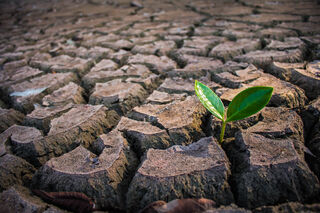 Our Barren Cultural Soil Source: Rteenatapong / Freepik
As a psychologist, I am a witness to the many causes of depletion of our cultural soil. The biggest cause that I see is a growing deficiency in genuine communication. It astonishes me how uncomfortable it is for a growing number of people to communicate their feelings directly in person to another human being, especially when there is discord between them. With each generation we become better at using the latest technology to create emotional barriers between ourselves and others, making it easier for us to avoid listening to them. But good communication requires listening just as much as it requires expression — a lesson psychologists are forced to learn early in our training. It is so much easier to avoid listening to someone when we don’t have to face them — when we can ignore their calls, texts, and emails, or simply block them on social media. Without truly listening to others, we end up talking at them instead of talking with them, and when we do this we are unable to give them the respect they deserve.
The problems described above have led to the gradual coarsening of our national discourse and to the most divisive presidential election of my lifetime. We have all come away wounded from this election — even those who are celebrating Joe Biden’s victory — because our relationships with friends, co-workers, and family members who voted the other way have been damaged.
Perhaps the best commentary on this came from Dave Chappelle on Saturday Night Live a few weeks ago, when he said:
 Dave Chappelle Source: Ralph_PH / Wikimedia Commons
"I would implore everybody who’s celebrating today to remember, it’s good to be a humble winner. Remember when I was here four years ago? Remember how bad that felt? Remember that half the country right now still feels that way. Please remember that. Remember that for the first time in the history of America, the life expectancy of white people is dropping. Because of heroin, because of suicide. All these white people out there that feel that anguish, that pain, that man, they think nobody cares. Maybe they don’t. Let me tell you something. I know how that feels. I promise you, I know how that feels.
"You’re a police officer. Every time you put your uniform on, you feel like you’ve got a target on your back. You’re appalled by the ingratitude that people have when you would risk your life to save them. Oh, man. Believe me. Believe me, I know how that feels... I just hate that feeling. That’s what I fight through. That’s what I suggest you fight through... Got to find a way to forgive each other. Got to find a way to find joy in your existence in spite of that feeling."
How can we heal our wounds? Here are three suggestions:
1. Avoid Conflict. While etiquette experts recommend avoiding discussions of politics and religion as a rule, this is especially true now. For the foreseeable future, steer clear of conversations about the election, and even discussions about the best way for the government to handle the COVID pandemic when talking with those most inclined to fight with you on these topics.
Due to this year's presidential election and the turbulent political landscape we now inhabit, the most salient aspect of most people's identity of late has been their political affiliation. However, we all have many, many other facets to our identity, like the sports teams we root for; the TV shows we're fans of; and the community organizations we are part of (e.g., the PTA; the VFW, the Girl Scouts, etc.). Let one of these other aspects of your identity come forward while pushing your political identity to the background.
THE BASICS- Why Relationships Matter
- Take our Relationship Satisfaction Test
- Find a therapist to strengthen relationships
2. Talk with People in Person, Not at Them on Social Media. Practice being a better listener. Rather than talking at people on social media, talk with people in person in a way that communicates to them that what they say is important to you. Validate the feelings behind their opinions, even if you don’t agree with the opinions themselves (e.g., "Uncle Bob, while I disagree with your position on guns, I can understand how you feel the need to carry a gun after having been robbed at gunpoint").
When people feel that you have listened to them, they will be more inclined to listen to you. You may not convince people to think differently, but your relationships will improve. Believe it or not, people often do change their minds after an honest debate, though not on the spot, and certainly not after being called a "racist" or "snowflake."
Relationships Essential Reads Feeling Angry? You Might Be Missing Time To Yourself
 Don't Be Someone's Second Potato
3. Be Intellectually Honest. In a previous post, I discussed components of intellectual honesty, namely, avoiding propaganda and logical fallacies.
When talking about current events cannot be avoided, rather than parroting talking points from MSNBC or Fox News, tell people about your own personal experience. From what I've observed, in cases where people have modified their opinions in response to what another person has said, the arguments came from someone's personal experiences, not from the polished talking points on cable news.
Why is this so?
Because over the past 20 years, we have all become increasingly suspicious of anything that came from someone else's 'rectangle.' We've all come to recognize that we live in a world awash in propaganda, and though we are loathed to admit it, we know that most of the information we've obtained from our own rectangles is likely biased in some way.
So we are all suspicious of information passed down to us by sources we don't trust. And though each of our friends and family members are capable of lying about their personal experiences, we inherently have more faith in them than the information we know came from a media source, perhaps because we know other people in our lives who can validate or invalidate the personal experiences of those we know best.
In closing, I wish all of you a Happy Thanksgiving and peace in your efforts to heal the relationships in your life.