In my office, I have a picture—a sketch of an optical illusion originally created by William Hill, entitled "My Wife and My Mother-in-Law." The drawing cleverly integrates the heads of the two women: one young (the "wife") and one old (the "mother-in-law"). As shown below, the image is drawn in such a way that in order to toggle back and forth to see the young woman and the old woman, you must refocus your eyes differently on the same set of details. Are you able to see both women in the picture?
Hint: The nose of the old woman, who is looking left, is also the chin of the young woman, who is looking almost straight back.
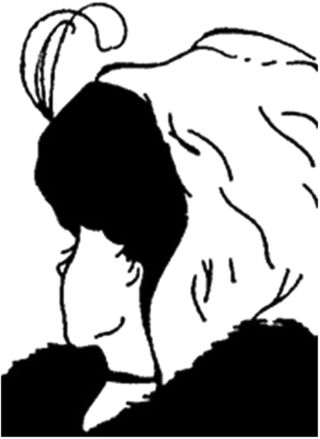 "My Wife and My Mother-in-Law" Source: William Hill / Library of Congress (Public Domain)
I use this image in my practice as a metaphor to help people to understand that, in most situations in life, what you see depends on which details you focus on. As such, part of my work with patients involves helping them focus differently on the same details already present in their lives. In doing so—both with patients and with myself—the success I've had has validated the wisdom of Dr. Wayne Dyer, who eloquently said: "When you change the way you look at things, the things you look at change."
The coronavirus pandemic has changed the way we look at things for the past three months, mostly for the worse. On the levels of personal health, public health, social order, and the global economy, where most people once saw vitality, they now see vulnerability. To be sure, we are facing extraordinary challenges right now on each of these fronts. But our minds, much like our eyes, can be deceived.
When we focus only on the negative details of a situation, it creates an illusion that things are more dire than they actually are. In some cases, this attitude can lead people to inaction, believing that "all is hopeless, so why bother working to make things better?" In other cases, it can lead to people behaving with extreme selfishness or violence. Because it is so easy for many people to focus on the negative details of a situation, in this case, the coronavirus, I would like to recommend an alternate perspective: one that shifts our focus from what we can't control to what we can control.
 Wayne Dyer Source: Phil Konstantin / Wikimedia
In a recent article, "Personality in 3D," I described three different personality orientations—physical, emotional, and intellectual—and gave general recommendations for understanding and helping people in each of these categories. In this article, I will provide specific recommendations within each category to help people refocus on things they can control amid the current coronavirus outbreak. With so many of us being asked or required to stay home from work, this period offers us all an opportunity to finally start some of the projects we've been putting off for so long.
Physical Activities
Cleaning and Organizing: In my personal and professional experience, I have found evidence supporting the notion that your physical environment reflects your mental environment. In support of this notion is Admiral William McCraven's 2014 commencement address (with over 10 million views), imploring recent graduates from the University of Texas to make their beds as a means of changing their lives and, ultimately, the world. To Admiral McCraven's recommendation, I would add taking a shower every morning, for two reasons: First, disinfecting your body as often as possible is one of the physical things you have the most control over during these uncertain times; and second, a hot morning shower will help you to feel renewed and energized, priming you to a positive mood.
 Make Your Bed Source: Alexander Zvir / Pexels
What are the small tasks in your house (or perhaps just in your bedroom) that you have been neglecting? Catching up on laundry? Fixing the closet doorknob? Disinfecting the bathroom? Reorganizing the pots, pans, and Pyrex in your cabinets? Tackling that huge stack of mail on the desk in your office? This is your opportunity to make a dent on all of these things.
THE BASICSRemember: An organized mind begins with an organized room.
Emotional Activities
Avoid Negativity: The coronavirus outbreak has led many people to over-expose themselves to news, most of which has been negative and emotionally disturbing. During these times, staying informed is a must; however, how you choose to get your news and how much of it you expose yourself to can be managed in such a way to limit your emotional reactivity.
In an incredibly insightful journal article, Dr. Deborah Serani deconstructs the ways in which TV news broadcasts go to great lengths to stoke ratings by promoting "trauma-driven content" and "fear-based material," using loud alerts and splashy graphics to maximize emotional reactivity. As you can imagine, long-term exposure to this content is likely to leave most viewers feeling perpetually anxious and angry.
Coronavirus Disease 2019 Essential Reads Update on COVID-19 and How It Changes the Brain
 How Political Partisanship Can Be Deadly
To protect yourself, I have the following recommendations for your news consumption. First, get your news from written sources, not TV: This will ensure that you can get all the necessary information you need to stay informed while avoiding emotionally-reactive sound alerts and jarring graphics. Second, limit your news consumption to one or two 15-minute periods during the day: Don't graze news articles throughout the day. Third, when possible, opt for news from expert sources (e.g., the Mayo Clinic website) over more sensationalized media outlets: In times like these, facts matter, and misinformation can have serious consequences.
 Video Chat Source: Christina Morillo / Pexels
Seek Positive Interactions: One of the main tools helping us to limit the coronavirus outbreak is social distancing. While this is important and necessary, it is not without side effects, including isolation and depression. To combat this, try to maintain as much safe social contact as possible, preferably over video chat (e.g., Skype, Facetime, Zoom, etc.).
Also, if you go on social media, I strongly recommend against posting anything negative, particularly about politics. Be mindful that what you put out into the world will eventually come back to you, and when it does, there will be an emotional consequence for you at some point in the future.
 Crossword Source: Greg Williams / Wikimedia
Intellectual Activities
Stimulate Your Mind With Constructive Distractions: What was the last novel you read? Have you ever finished a New York Times crossword puzzle? Would creating a household budget with your expenses and revenue help you to stay financially solvent during these uncertain times?
These are all mental tasks that can help you in myriad ways: not just in the current crisis, but in general. Among my friends and family, I recently started a TEDTalk Challenge: 25 TEDTalks in 25 days, focusing on the 25 Most Popular TEDTalks of All Time. We all know you are what you eat: However, this is not only true for what you feed your body but what you feed your mind as well. Stay healthy: We will get through this together.
 Podcast Source: Tommy Lopez / Pexels
Click Here for a Discussion of this Article on the Hit Show: "I Do Podcast".