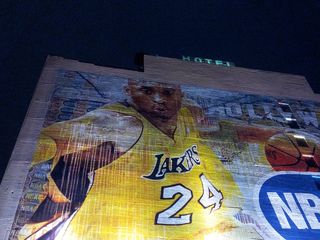
 Source: Image by WolfWolfWolf from Pixabay
A friend at church came up to me, grabbed my shoulders, and looked me in the eye and said, "Kobe Bryant just died!" I thought he was joking at first but when he said, "I'm not kidding" and I checked my phone's news feed, reality set in that Kobe Bryant and his 13-year-old daughter were among the nine killed Sunday in a helicopter crash near the Calabasas region of Los Angeles.
Like many people, I was shocked. As a basketball fan and player who grew up around basketball (I also officiate basketball games), I considered Kobe a great ambassador for the sport. I respected his competitiveness, sportsmanship, and desire to improve his craft. But beyond basketball, he was a global icon reaching a status few sports heroes have achieved.
While other famous luminaries have died unceremoniously in recent years, something about Kobe's death hit me differently. Sure, there's a basketball connection, but I think from a psychological perspective, his death felt like God tapping me on the shoulders.
At 41 years old, Kobe had retired from the game and was blossoming in his next stage of life as a businessman. In addition, he was a family man: husband of 18 years and father of four daughters (the youngest still an infant). As a father myself, I can only imagine the void left by his passing. Daughters with no more opportunities to have their father snuggle with them, read to them, and ultimately be with them. (Of course, Bryant's legacy is still a complicated one, due in part to an allegation of rape.)
Obviously Kobe's stature as one of the greatest to ever play the game of basketball makes this tragedy even more pronounced. On a relational level, I was able to acknowledge to myself that Kobe's death made me sad. Sad for him, his family, and his fans, as well as the other families who also perished.
On a spiritual level, this was also a stark reminder of how finite our time is on this earth. No one is immune to tragedy. Certainly, no one is immune to death. But the image of Kobe perishing in a helpless descent adds to the grief and psychological denial. On the court, he played with relentless tenacity, ferocity, and an unyielding mentality to rise above any challenge in front of him. The incongruous nature between his personhood and the nature of his death could not be more pronounced.
And as much as I try to live in denial about death in general and suppress having conversations about it, Kobe's tragedy is a wake-up call to myself that I must live each day with purpose. It can easily be ignored or postponed by my own rationalization that I have more time ahead. This goes hand-in-hand with my ability to blithely live life with nary a thought towards my own mortality. Part of that is my own doing, as I've suppressed conversations about life and death and instead substituted them with a number of mind-numbing activities to pass the time (i.e. binge-watching TV shows, endless hours scrolling through social media, or thinking about my next Amazon purchases).
So Kobe's death feels like a cosmic wake-up call. Does God want me up to wake up to my own mortality? Does he want to awaken you to something grander in your life? Just as much as I need to share my love with my family and community, I must remember life is precious. There are no guarantees on the belief of "living to a ripe, old age." The sudden, abrupt, and shocking death of Kobe Bryant is a graphic reminder of how we must honor the days we have now, love the people around us, and live our lives with intentionality, purpose, and authenticity.