After retiring from her career as a conservation biologist, Delia Owens took a crack at writing a novel. She didn’t expect much success, and has said: “I never thought I could write a novel.” But her book, titled Where the Crawdads Sing, turned out rather nicely. She found a publisher, Putnam, who optimistically printed 28,000 copies. That was hardly optimistic enough, though, and the book has now sold that many copies 160 times over (at 4.5 million, and still counting, and now in its 40th printing). What began as an avocational lark by Dr. Owens became, by a wide margin, the best-selling novel of 2019.
But according to an article in yesterday’s New York Times, the experts in the publishing industry can’t quite figure out why (Alter, Dec. 21, 2019). The book apparently doesn’t fit into any of the publisher’s standard categories; it’s one part murder mystery, one part paean to the natural beauties of North Carolina’s coastal marshland, one part romance, and one part exploration of human nature.
What’s the psychology behind why this particular book has become such a stunning success?
Background on the author
 Delia Owens Source: Dawn Marie Tucker, public image of author from publisher's website
Delia Owens grew up in a rural area of Georgia, where she became fascinated with nature. After earning her undergraduate degree in zoology, and then a Ph.D. in animal behavior, she spent two decades in the wilds of Africa, studying the behavior of lions and hyenas. By academic standards, she did not have a stunning career. If you look on Google Scholar, you will see that she is first author of a 1984 paper on “Helping behavior in brown hyenas” in the prestigious journal Nature. But that paper has only been cited 95 times in over three decades. She and her former husband also authored a couple of books on their experiences working to protect elephants from poachers, but neither of those books has been highly cited, which is the criterion that a university would use to evaluate a researcher’s scientific impact.
In 1995, she and her husband left Africa after a controversy in which an elephant poacher was killed under mysterious circumstances, in which her husband was possibly involved. They moved to a remote area of Idaho, continuing a reclusive existence she’d enjoyed as a child growing up in rural Georgia and as a researcher in the remote regions of the Kalahari Desert.
Fiction and the Seven Fundamental Motives
I was unaware of the book’s stunning success, but after my wife, Carol Luce, told me it was the best book she’d read in a long time, I picked it up and had a hard time putting it down until I was done. Then I passed it on to my son Dave, who has collaborated with me on several projects trying to apply evolutionary psychological ideas to everyday life. We’ve talked a lot about how books, movies, and advertisements are most effective when they engage what we call the 7 Fundamental Motives (basic survival, protecting yourself from the bad guys, making friends, gaining status, finding mates, keeping those mates, and caring for our offspring) (see Figure 1).
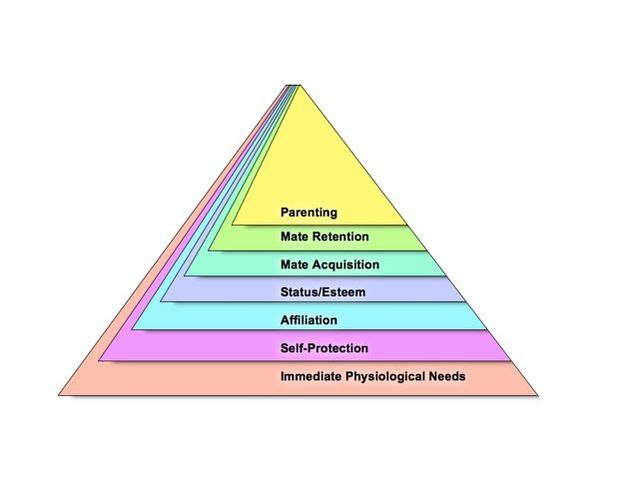 Figure 1: Renovated pyramid of human needs Source: From Kenrick, Griskevicius, Neuberg, & Schaller (2010). Original figure by David Lundberg Kenrick, used with permission.
We believe that a good novel or movie taps into one or more of these Seven Fundamental Motives; a great one pits them against one another.
Delia Owens’ book succeeds precisely because her background in evolutionary biology allows her to gracefully lead the reader through an exploration of the natural conflicts between our fundamental human motives. The book depicts a character who is frustrated in filling every single human need, from the bottom of the pyramid to the top.
- Survival: The central character in the book, Catherine Danielle Clark, or Kya, is deserted first by her mother, then by her older siblings, and finally, at the ripe old age of 7, she is left living completely alone in a shack in a remote marsh when her alcoholic father disappears. Very shortly after the story begins, she has nothing to eat, and no resources to provide for herself. Yet she solves the problem by selling mussels to the owner of a local boat dock and general store.
- Self-protection: Kya’s father is a violent drunk, who must be avoided most of the time. Later in the story, another violent drunk beats her and tries to rape her, and then returns to hunt her down after she narrowly escapes. How she gets away from her stalker is part of a mystery that opens the book.
- Affiliation: After her siblings leave her, Kya is completely friendless, living alone in a shack in the marsh. When a truant officer tracks her down, and drives her into town to go to school, the other kids laugh at her. She never returns, and resolves to live a completely independent life. But slowly and haltingly, Kya does realize she needs other people to survive.
- Status: Kya is scorned by the people in the nearby town, who call her the Marsh Girl, and shoo her away from their children because she is dirty and unwashed. At the book’s beginning, she is completely illiterate. Yet by the end, she stumbles into success, when her obsession with nature and biology lead her to become an accomplished author of several field guides about the local flora and fauna. But just when it seems as though she has it made, serious complications arise that threaten to make her life worse than it ever was.
- Mate Search: Kya grows into a beautiful teenager, but she can only watch attractive young men from a distance, aware that she is a social pariah. Although powerfully drawn to finding a lover, she has no idea how to connect.
- Mate Retention: Kya eventually finds romance, twice, but both of her loves desert her because they do not regard her as fit for life in normal society. She ultimately finds true love, or more properly, it finds her, in a manner consistent with evolutionarily based sex differences in human mating strategies.
- Kin Care: Kya spends much of her life wondering how in the world her family members, especially her mother, could ever have deserted a small child. As she begins to learn about biology, she even ponders several evolutionary explanations for her family members’ selfish choices. In the end, though, she is reunited with the brother who was closest to her in her childhood, and she discovers what became of her mother.
There are of course plenty of great books by talented biologists that regale us with stories about the natural world, and there are plenty of great books about human nature. What distinguishes Owens’ book is that it is, at heart, not a book about nature, but a mystery novel. The heroine’s former lover is found dead, and almost from the beginning, it is clear that she is the prime suspect. During parts of the story, it seems plausible that Kya did commit murder, during others, it seems just as likely she did not. The ending, which we won’t give away, in case you’re not one of the 4.5 million people who’ve already read the book, contains the kind of twist you’d expect from Agatha Christie or Arthur Conan Doyle. It doesn’t hurt that, on the level of the individual sentence and paragraph, Owens pulls the reader along with prose that borders on poetry.
This essay was coauthored by David Lundberg-Kenrick.
 David Lundberg Kenrick Source: Photo by Doug Kenrick, used with permission.
Related blogs:
For some background on the 7 Fundamental Motives and the evolutionary psychology behind a good work of fiction or cinema, see: