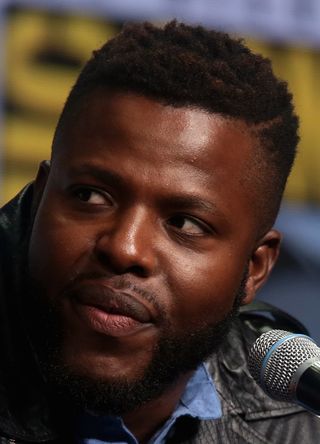
 Actor Winston Duke (Black Panther's M'Baku). Source: Wikimedia Commons
In the films Black Panther and Avengers: Endgame, actor Winston duke plays the character M'Baku, leader of the Jabari tribe in the fictional nation of Wakanda. In Black Panther, M’Baku challenges T’Challa for the Wakandan throne and Black Panther mantle, he loses. The film version of M'Baku accepts his loss. He even leads his people in coming to T’Challa’s assistance in the climactic battle against Killmonger’s forces, playing out the classic cavalry trope to turn the odds in T’Challa’s favor, and appears as part of the assemblage whom Captain America later unites against Thanos under one name when he says, "Avengers, assemble!"
In the comics, however, M’Baku is T’Challa’s enemy. Even though the film version of M’Baku might seem like a different character from the print version, these depictions instead show how the same individual could change under different circumstances. Before becoming the villain Man-Ape, M’Baku is a great warrior trusted to govern Wakanda in T’Challa’s absence (Avengers #62, 1969). After he joins the outlawed White Gorilla Cult, he tries to usurp the throne in order to replace the official state religion and get every Wakandan to worship the White Gorilla instead of the panther god Bast. This is unlike the film version, in which he and his tribe freely worship a gorilla god and no one else seems to mind. Movie-M’Baku does not have to rebel in order to worship as he pleases because he already has religious freedom. So these different versions show how the same person might follow different paths under conditions of religious freedom versus religious oppression.
 Black Panther Psychology: Hidden Kingdoms. Source: Travis Langley, Sterling Publishing (2019).
People living under conditions of authoritarianism, in which authority figures are strict and punish anything other than unquestioning obedience, might show authoritarian obedience or they may rebel. A new convert to a banned religion could immediately feel the inherent threat of consequences even before any repercussions have occurred. People who feel threatened experience physiological arousal that needs an outlet (Endler & Shedletsky, 1973). In the classic fight-flight-freeze response to threat (Bracha et al., 2004; Webster et al., 2016), M’Baku is the kind of person whose baseline response is to fight. In the movie universe where his religion is not threatened, he does not feel the same need to fight for power.
Related Posts: