Alex Kotlowitz is an award-winning journalist who has been one of our foremost chroniclers of the issues facing the American city, particularly the lingering impact of trauma at the individual and community level. In his new book An American Summer, he chronicles the lives of several Chicago residents throughout the summer of 2013. That summer was relatively prosaic by the city's standards which makes the stories of loss, grief, and suffering all the more poignant. I was excited to talk with him to hear his thoughts on the ways trauma has shaped urban communities, the impact his work has had upon himself, and his hopes for the future of our shared city. Our conversation has been edited for length and clarity.
Tell me a little bit about how An American Summer came about.
 Kotlowitz at the 73rd Annual Peabody Awards. Source: Charles Manley/Wikimedia Commons
In some ways I see it as a bookend to There Are No Children Here. When I worked on that book one of the things that really knocked me off balance was the violence in that community. What’s been so unsettling and disturbing is the stubborn persistence of that violence over the years, the numbers are absolutely staggering. I think we have completely underestimated the effect of the violence on both the spirit of individuals and the spirit of the community. There's a kind of glibness to how those of us who don't live in these neighborhoods think about it. There’s a sense that people somehow get accustomed, hardened, or numb to the violence, yet I think that violence gets in your bones, it shapes you. For the people I write about, many of them are so forcefully trying to keep it from defining them.
Your book centers on events that occur in the summer of 2013. Violence in Chicago famously reached a record high three years later in 2016, and I was wondering if that impacted the writing at all or if you thought of revisiting things as you wrote.
The summer [of 2013] was a reasonably arbitrary summer, and, as I write in the book, by Chicago standards it was a reasonably tame summer, and in some ways, it worked to my advantage. One of the things you come to realize during the course of reading through that summer in the book is just how pervasive [the violence] is. At the end of the summer, the police superintendent at the time Garry McCarthy and the mayor declared "mission accomplished" and then of course three years later the numbers almost doubled to rates we hadn’t seen in some 20 years.
I wanted to ask about your choice of title. By calling it An American Summer, you hint at a broader narrative than just what's happening here in Chicago.
Right, this is not at all particular to Chicago. I could have written this book in Baltimore, New Orleans, Philadelphia, so many other cities. Violence in Chicago isn’t even in the top 10 in this country. By that title, I really wanted to bring home that this is not happening somewhere else, this is America, and for those of us who don't live in these communities these are our neighbors. It’s also apparent to me in the wake of these horrific mass shootings, like in Newtown or Parkland, we ask all the right questions: what could bring somebody to undertake such a horrific act, what do we do to prevent it, how do people in the communities move on with all of this bearing down on them. We don’t ask these questions in the neighborhoods that I write about in this book.
Why do you think that is?
I think that so much of it has to do with race and with class. These are communities that have been pushed aside. The thing that these neighborhoods all have in common is that they’re communities of color and communities that are deeply distressed. It’s so easy for the rest of us to turn our heads. It’s the great paradox of this country in my mind is that we’re a country of such generosity and yet we’re also a country of such deep neglect.
I'm also a white man who primarily works in Black and Latinx communities, and I wanted to know what your experience has been as you move through these neighborhoods and spaces where you obviously don't fit in.
Given what I do, I'm always an outsider wherever I go, and if it's not by race or class it's by gender, age, you name it. Clearly, I am an outsider in these communities and I recognize that when I spend time with the people that I do I'm there at their invitation, and it's a real privilege to be there. I try to be direct and straight with people about what I'm doing. I have the luxury especially when I'm working on a book to be able to spend time with people over months, sometimes years, to get to know them. I try to honor their stories as best I can, both by being honest to who they are and to what they've experienced and by treating them with the dignity and respect I'd want to be treated with in turn.
Has your approach changed over time?
Not really. I'd like to think I'm more aware of not trying to compromise anybody's safety, but having said that it's always hard. There are times I miss the mark or there are things I overlook. This was a particularly difficult book in some ways because I was juggling so many stories and many of the stories have multiple characters in them. That was a lot to hold on my plate at one time.
THE BASICSI could see many of my own patients in the people you write about. Your approach reminded me of a collection of short stories in the way you take snapshots from the lives of your subjects. Was that your intention from the beginning or did it come about as you did your reporting?
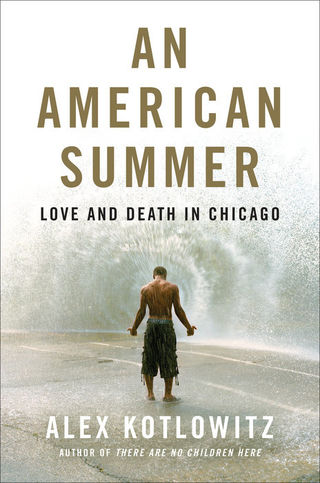 Source: Penguin Random House
My inclination as a storyteller is to find a single narrative, not unlike what I did with There Are No Children Here, but for what I wanted to accomplish in this book I felt that it was the breadth of stories, the breadth of experiences, that was so necessary. There wasn't one single story that could capture the omnipresence of the violence and the extent of it. It is a collection of short stories but some of the stories course through the summer so there is a narrative thread that I hope pulls you through. I also think the stories are deeply intimate, and my hope as a nonfiction writer is to borrow from the best storytelling of novelists and short story writers so it feels genuine, real. As I mentioned at the beginning of the book, I did not intend to grapple with public policy or prescriptions. It's not that it doesn't interest me, it's not that it's not important, but I really wanted to get as close to the ground as I could to give some humanity to the people whose stories I'm telling.
Were you ever tempted to pull the camera back, so to speak, to delve into policy?
No, to be perfectly frank. It wasn't difficult because public policy is not my bailiwick. I've got strong opinions about it, but I knew if I started writing about public policy, especially when it comes to violence, it ran the risk of being outdated in six months to a year. In telling some of these stories inevitably questions of policy and prescriptions would organically emerge, and you see that in some of them. So no, the power of the narrative is that they ask questions, not that they answer them, and that's what I hope to do in this book.
Trauma Essential Reads To Tell or Not to Tell: Disclosing Your Painful Past
 Healing in Motion
Within my field of social work, we talk often of vicarious trauma, the way in which working with survivors of such violence can impact those who bear witness to their stories. It struck me that, as you mention in the book, you've been reporting in this vein for thirty-some years so I was wondering what impact this work has had upon you personally.
I saw [vicarious trauma] in people like Anita and Crystal, two of the social workers I write about who experience [it] from all they've experienced through the kids they've worked with. I hesitate to talk about myself because I feel that whatever I say pales in comparison to what those I've written about the experience. There was a part in the course of writing the book where I fell into a deep depression unlike any I've experienced before, and looking back on it now I have no doubt that it was in part due to what you call the vicarious trauma, or secondary trauma, of listening to these stories. I, of course, have the luxury that I've got some distance from it and I also have this catharsis of being able to sit down and tell these stories. There is something really healing about being able to share stories. There's a line I always remember in Tim O'Brien's The Things They Carried, a moment in the end where he writes "this too is true: stories can save us." I think he was talking to his readers as much as he was to himself. Just being able to put pen to paper has an incredible capacity to heal.
I couldn't help but notice that many of the people you write about seem to be experiencing at least some degree of post-traumatic stress disorder, and I know you noted as much in the text. Did you find that those who needed help were able to access mental health services?
There isn't much out there. Many of the people I spent time with have the same kind of symptoms as combat veterans: easy to anger, hypervigilance, trouble sleeping, self-medicating, I could go on. The big difference of course for those living in these neighborhoods is there's nothing "post" about their post-traumatic stress. The person in the book who for me gets it better than anyone is Eddie Bocanegra. He had two brothers who served in combat and, given his own experience of killing somebody when he was 18, he's had his own trauma. He's started two remarkable programs in the city. One brings veterans from Iraq and Afghanistan to mentor youth in some of these neighborhoods, not to speak about their military experience but to talk about their time coming home. Now he's also running a program where they're providing jobs for young people but they're also required to undergo cognitive-behavioral therapy in groups. I'm really excited about that. There's also this program, Healing Hurt People, that was started in Philadelphia and is now in the city. You're beginning in the past few years to see people directly dealing with the PTSD that you see in people living in these communities.
Your book begins a year after then-mayor Rahm Emanuel closed half of the city's mental health clinics, did you see any impact from that decision on the ground? As you mentioned earlier, there weren't many services, to begin with.
I didn't. But having said that, there's no question that there's such a dire need for mental health services. But as you know, it's hard to get people, especially young people, to see social workers and therapists. There's a stigma across the board for young people, so we've got to really work at that. But you're absolutely right, there's a real dearth of services available.
As I was reading the book I was inspired by the resilience many of your subjects exhibit. We have a parallel concept to vicarious trauma in social work, vicarious resilience, and the basic idea is that you can be inspired by what other humans can endure. I also questioned that reaction in myself, both out of concerns for how much we should expect other humans to be able to cope with and a fear that seeing these as inspirational tales could absolve us of responsibility to fix what contributes to their suffering. I was wondering if you had any thoughts on that.
I think it's a fair question if I hear what you're asking. The people I write about for the most part are standing erect in this world that's slumping around them, some of them moving forward and some of them moving forward heroically. They inspire me, they keep me going, Eddie, Lisa Daniels, Marcello, Thomas, I could go on, people I deeply, deeply admire. I think of this moment in Eddie's story, a story that is really about trying to forgive yourself for what you've done. When one talks about resilience I look to someone like Eddie, but he's still grappling with it. I remember his wife Kathryn Bocanegra tells him at one point, this is the price of resilience. In other words, resilience isn't an endpoint, it's a constant struggle, and so we make the mistake of thinking these people have all come out of it intact and moving on, but they're still grappling with all of this. It's really important that we acknowledge that. We also need to be careful of holding up people as if to say 'look at what this person has done,' as if somehow everybody's capable of that. Some of the people in this book had incredible resources--Thomas has this social worker Anita Stewart by his side, Marcello is living at Mercy Home for Boys and Girls, a place that really understands trauma. Not everybody has that support system. These are communities that are lacking in so many services and we need to recognize that.
I wrote a book recently (This City is Killing Me: Community Trauma and Toxic Stress in Urban America) that also deals with violence in Chicago and I struggled with it to a degree because I didn't want to play into some of the talking points about Chicago in the media. I know you've been doing this for much longer than I have so I wonder how you've dealt with it.
Do you mean this notion that this is all Chicago's known for?
Exactly.
And, more to the point, that this has somehow defined the Black or Hispanic community in Chicago. I recognize that I run the risk with this book of that. Chicago itself is an incredibly diverse city, and I don't mean diverse just by race and ethnicity but the Black and Latino communities are incredibly diverse, and that's important to recognize. I understand the city and why the city would be very defensive about this coming to define it, but I think what maddens me is that it doesn't feel like a more urgent matter, both to the city and to the rest of us. That's why I want to scream from the mountaintops, 'where's everybody been?' But I hear you. I love Chicago, the city has one of the most beautiful downtowns in the world, but it's a complicated place.
What do you hope your readers walk away with after finishing the book?
I get asked this a lot, and I have to smile because my ambitions as a writer are somewhat modest. I'm a storyteller, it's what I do, a nonfiction storyteller. I tell stories that I hope people, in the end, will look at themselves and the world just a little bit differently, and if I'm so fortunate, that the book will get politicians and policymakers to maybe think about this matter differently. That's really what I aim at. I don't see it as necessarily a call to action as much as it is a call to acknowledge and recognize what's happening amongst our neighbors. I wrote There Are No Children Here twenty-eight years ago, and for me, one of the most sobering things is how little things have changed. I recognize that I'd be foolish to think somehow my writing is going to change the world. I just hope it pushes people to think about the world and themselves just a bit differently.
I also think in a way it honors the stories of the people you write about that they're not a means to an end, to some bigger argument. It's more like, 'here's what's going on, you have to look at it, confront it.'
People are smart. I think when they see this and hear this it will anger them in the same way it angers me, agitate them in the same way it agitated me.
In a couple of weeks, Chicago will elect a new mayor. What are your hopes for the future of the city?
This is a remarkable moment for the city. We've got two candidates who have a fundamental sense that life ought to be fair and a level of awareness as they travel around the city that life is unfair for many. Also, they've both been deeply enmeshed in matters of criminal justice reform. I'm hopeful for what might happen in these coming years.