Apparently, actors know their place when giving award acceptance speeches at the Oscars. Actors delivering Academy Award acceptance speeches make more self-references than do directors, which is a sign of deference, according to a recent study published in the Journal of Language and Social Psychology.
“Actors and directors are social beings who fall in line with their cinematic rank and language can reveal such status differences,” writes David M. Markowitz, PhD.
The investigator mined Oscar acceptance speeches between 1966 and 2015—delivered by 220 actors and directors—using automated text analysis.
As hypothesized, actors spoke used the personal pronoun “I” more than directors did in their acceptance speeches.
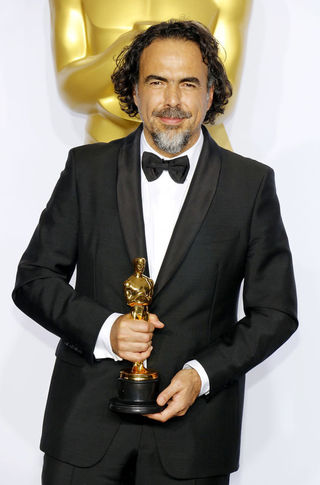 Alejandro González Iñárritu, winner of the best director Oscar in 2016 for The Revenant. Source: buzzfuss/123RF
A higher frequency of first-person singular pronoun use suggests self-focus and lower status compared with a higher frequency of plural pronoun use (eg, "we"), wrote the author.
Conversely, plural pronoun use suggests collective-focus and higher status. Unexpectedly, acceptance speeches given my directors did not contain increased use of the pronoun “we.”
The findings of this study jibe with the notion of a director as architect and actor as a storyteller who helps relate the director’s vision.
Markowitz also found that directors used a more analytic communication style when delivering their speeches. Specifically, directors used more function words (eg, articles, prepositions, and quantifiers) than did actors. Function words are used more frequently in complex, organized, and structured communication, according to the author.
In the study, actors used more content words, including verbs, adverbs, and pronouns, to convey a narrative style of speaking, with plenty of anecdotes.
On post hoc analysis, Markowitz observed that unexpected Oscar winners expressed more positive emotions than did expected Oscar winners. This outpouring of emotion is likely due to the surprise of winning.
“The data suggest that actors communicate with more self-references than directors, evidence of their lower cinematic status,” concluded the author. “Directors are also analytic thinkers compared to actors, who tell stories through their communication.”