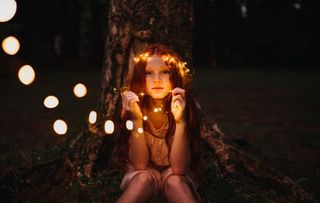
 Source: Matheus Bertelli at pexels
Cellphones, televisions, pads, and monitors are not generally considered unwitting enemies of sleep, yet often are. We have great fun with electronic lights, but we are not built for light at night. At night we are designed to sleep.
A recent study from Kenneth Wright’s group at the University of Colorado highlights for preschoolers what has long been known for adults:
1. Light resets biological clocks
2. Light at night arouses us and keeps us up, and frequently if slowly leads to insomnia
The Study
Part of the Colorado Study, reported by Perri Klass in the New York Times, was intended to look at whether the wide eyes and clear lenses of preschool children might make them more susceptible to the wake-fulfilling potential of light than adults, with our aging, yellowing lenses and diminished appreciation of the sun (many think depression in the elderly in part comes from less light getting into the retina.) This study did not show that.
What it did demonstrate was that melatonin production, the hallmark hormone of darkness, is quickly diminished by light exposure at night. Kids aged three to five who had spent five days in a standard wake cycle followed by a “darkened” schedule for one day, were then allowed to play at a “light table” the next night before they slept.
And their melatonin production went down, and stayed down — which George Brainerd and others have demonstrated in adults for many years. Even a short spritz of 30-60 seconds of bright light in the middle of the night can knock out melatonin production and make returning to sleep difficult.
Which is the sort of thing you get from a middle of the night text message from your boss or your son. An experience at least half the younger part of our population now considers normal.
Preparing for a future with more sleepy, cranky insomniacs.
How We Sleep
For many sleep researchers, Alex Borbely’s model of sleep induction remains the standard. Borbely proposed two major forces which make us sleep.
The first he called Process S. Like most elements of sleep physiology it possesses numerous components. But a big one is how long you’ve been awake.
People awake for 50 hours are generally a lot sleepier than people awake for five. Exercise also plays a role. Since the brain creates a huge cache of information when moving in three-dimensional space, requiring brain cell growth in memory areas during sleep, earlier in the day exercise tends to provoke greater sleepiness.
The second big factor inducing sleep is Process C, the circadian process. For a lot of us, body clocks are what really put us to sleep. The physiology is far more precise and time sharp than most realize. Work by Dirk Van Dijk and Charles Czeisler showed how the circadian system leaves us highly unlikely to fall asleep even a half hour before our normal bedtime until body clocks change the equation and rapidly make us sleepy.
THE BASICSWhat is the most powerful inducer of body clocks? Bright light. Light in the early part of the night makes our inner clocks later. Later at a wild inflection point, about ninety minutes before most of us habitually wake, this lengthening of the body clock goes into reverse, making early morning light shift our clocks earlier.
The result can be seen in people flying across time zones and in shift workers. Light in the really early morning greatly flummoxes body clocks.
Which is not to mention the powerful arousing effects of light. It’s not just melatonin production that gets “clocked.” Light resets immunity, alertness, and mood. Light is a full blown drug.
Sleep Essential Reads 6 Ways to Improve Your Sleep Without Medication
 The Brain Benefits of Being a Night Owl (or a Drinker)
And you have to be careful how you use drugs. People who get light through the night, even in the short doses of cellphone messages, often become prone to psychophysiological insomnia—where worrying about sleep, thinking about sleep, concerning oneself about sleep, stops sleep. Which is just another reason to cut the light at night.
Biologically Intelligent Sleep
If you treat your body as intelligent, it gets smarter. Part of biological intelligence is to recognize what the body is designed to do.
To learn, you need to regenerate information. A large part of that regeneration occurs in sleep.
And people don’t sleep well in bright light. Torturers know this well.
So to sleep, the pleasures of light, the mood elevation it brings, the entertainment and news it conveys, should be rationed in time and amount. To sleep most of us do better with an “electronic diet” before slumber. That electronic diet should be continued through the night.
Night is for rest. Rest is for regeneration, rebuilding your body. Sleep lets you remake your body's information, integrating all the new knowledge of the previous day into your life’s store. You learn a lot in sleep. You grow new brown cells. You renew the information that keeps you alive.
Light’s glory is meant for the day, not for the night.