 Source: Redtail Media / Used With Permission
Over four years, film director Chris Burke documented how his friend Brian Wallach teamed up with his wife Sandra Abrevaya to build a movement transforming research and patient-led advocacy in the world of ALS.
When Brian was diagnosed with the fatal disease, they approached the fight the way they knew best: like a political campaign. Brian and Sandra, both Obama campaign alumni and DC veterans, achieved unprecedented results: recurring federal funding totaling $100 million per year for five years, expanded access to experimental drugs, and more.
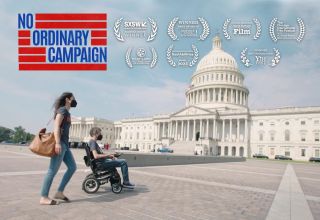
Burke tells their story in the feature documentary No Ordinary Campaign, which won the Festival Favorites Audience Award at SXSW and is now running on the film festival circuit.
This Q&A was edited for length and clarity.
Ryan Prior: How did you first meet Brian?
Chris Burke: I met Brian our senior year at Yale. Like many of Brian's classmates, I was convinced I would be voting for him for president someday. I was very much looking forward to working on his campaign. As it turned out, this project is a very different kind of campaign than we might have expected 20 years ago. But it has been perhaps more rewarding than working on a presidential campaign to be able to be a part of this and witness the things that he and Sandra and the entire ALS patient advocacy community have been able to accomplish: to document this process not only to celebrate their achievements, but to help illuminate a roadmap for other disease advocates and people who want to make change in general.
RP: How did you learn Brian was diagnosed with ALS and decide to play a part in that journey?
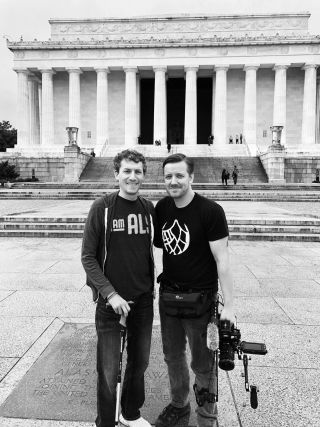
CB: He reached out to people little by little after his diagnosis, as he became more comfortable sharing it. Those of us who were college friends learned about it in the middle of 2018. I reached out to him, and said that if he ever needed help with anything – creative production related – I would be there for him. A few months later, he took me up on that. We started by shooting a launch spot for his nonprofit I AM ALS in January 2019. We used that opportunity to get hours of additional footage. I knew even then it was a lot bigger than could be encapsulated in one little video. From that interview, and then a couple of subsequent trips, it became clear there was a much larger story here, and it was something that would sustain a documentary.
I accompanied him to his April 2019 testimony in front of the House Appropriations Committee, chaired by Congresswoman Rosa DeLauro from Connecticut. That’s when I really knew I was in this for the long haul. On that trip, I met him on the curb of DCA airport. He came off the first flight of the day from Chicago and I came off a red-eye from LA. He was wearing his suit and you see him in the film trying to put his contact lenses in on the curb of the airport. His ALS is making his hands shake. He can barely do it. But after five tries, he does it and he's smiling and celebrating. And that in a nutshell is Brian Wallach, to me; it's like, oh, this is hard. All right. I'll just keep trying, I'll do something else. That really just speaks to his mindset.
RP: You interviewed Barack Obama. How did that come together?
CB: The fact that President Obama agreed to an interview for this project is really a testament to the power of the movement that Brian and Sandra built. It's a very obvious lineage, dating back to their days in the White House and on his campaigns: the idea of hope paired with action.
[Obama] has a lot of clear admiration for what they've done. He came into that interview very prepared and very informed on the issues. Of course, he was not only intelligent about the issues, but he showed a very touching connection to them and empathy for them. We had a little FaceTime call at the end of the interview and just the personal humor that he brought to the situation with them – which we show in the outtakes of the film – was a really beautiful moment.
 Source: Chris Burke / Used With Permission
RP: How can their success inspire other patient movements?
CB: One of the most impressive things about what Brian and Sandra have done and how I AM ALS has grown is the fact that it’s designed to play to the strengths of anyone who wants to participate. What I mean by that is, you don't have to be a policy expert or science expert. Maybe you're someone who just really loves making calls to grow the community or knocking on doors. Maybe you're someone who's really interested in growing clinical trials.
They’ve designed the organization around a number of community committees dedicated to many different aspects of fighting ALS. That's really cool because any challenge of this magnitude can be really intimidating, especially a life-or-death one like ALS. The way that I have seen their ability to build and grow a self-sustaining, self-expanding community is really impressive. The thing that sticks out is the inclusivity of it. They’ve made it possible for people to contribute in the way they feel most comfortable.
RP: How will the film be used as a tool for advocacy? Will this be available on streaming networks?
CB: We have a number of screenings coming up at several more film festivals. There are also some community-based screenings we're setting up. It has been an organic outreach of ALS community members across the country who want to bring this film to their town in California or Wisconsin or Virginia. We're working with people to set screenings in various different places to get more and more audiences to see it. We’re simultaneously working very hard to find it a home on a streaming service or network where it will be accessible to the broadest possible audiences. We are also working on a potential college tour.
Media Essential Reads How TV Lies to Us About Romance and Attraction
 Do UV Tanning Beds Really Prolong Lifespan?
We're just getting started. The same could be said of Brian, Sandra, and I AM ALS. They're just getting started. I don't see them slowing down anytime soon.