Can art reveal to us the capacities we have for resiliency and forgiveness? One example comes from the long-running series The Walking Dead and the character of Rick Grimes. A former sheriff, his story arc is not only about tremendous pain, loss, and hurt, but more about extraordinary heroism, resiliency, faith, and, ultimately, forgiveness.
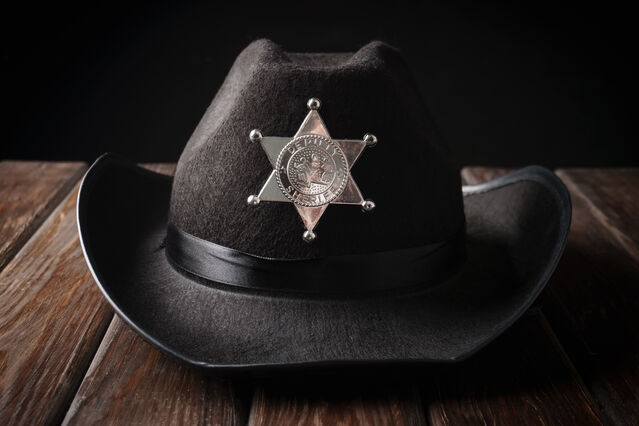 Rick Grimes/Character Source: Maksym Dykha/Adobe Stock Photos.
Within the series, there comes a compelling moment between Rick Grimes and a deadly protagonist named Negan. Finally, having the momentary advantage over an injured Negan, Rick must decide whether to acquiesce to his primal desire to avenge the ones he has lost to the villainous acts of Negan at the moment or to honor his dead son’s wish to not hurt anyone else, including Negan. The character, filled with rage, powerfully declares to Negan, and in front of those waiting for him to kill the villainous Negan, “my mercy prevails over my wrath.” Negan is spared and placed in a makeshift cell, and, as the series progresses, the audience comes to see Negan’s breakdown and change.
In fact, many times throughout the series, we see amazing acts of forgiveness and resilience by other characters who have been affected by Rick Grimes. It is creative writing by author and producer Robert Kirkman, who uses the idea of a zombie-filled dystopia as a way to speak to some important aspects of humanity.
Works like this may allow reflection on our own feelings, our own duality, and susceptibilities, as well as the potentials that reside within us. The use of a modern-day pop-culture element like zombies may also reflect some of the deeper seminal and sociological elements at work such as disconnectedness and individual isolation. Although the series predated the pandemic, many uncanny parallels were realized during the onset of COVID-19.
People’s fears did enlarge amidst the reality and lethality of the virus. This was only further encouraged by things like slow supply lines, deviant business practices based on scarcity of goods, road-ragers selfishly endangering others, social unrest, policing issues, and examples of people simply behaving badly. In his seminal work entitled The Wilding of America, author Charles Derber, whom I had the pleasure of interviewing years ago, talked with me about this phenomenon of people behaving badly. “Wilding” is a term he used to describe those whose individualistic and selfish desires take precedence over the safety of others (Derber, 2006).
The Roads Less Traveled
 The road less traveled. Source: bankajk/Adobe Stock Photos
But the dichotomy to such behaviors during the pandemic was also demonstrated by many who never lost their humanity—the health care professionals, teachers, and those who simply refused to weaken their resolve and instead leaned in further to help others, to maintain their resilience, and foster hope and faith in better days to come.
At the heart of this was resilience and, perhaps even greater, moments of forgiveness. Both resilience and forgiveness are factors that can help change the worst of situations if we allow the possibilities.
According to the American Psychological Association, “Resilience is the process and outcome of successfully adapting to difficult or challenging life experiences, especially through mental, emotional, and behavioral flexibility and adjustment to external and internal demands."
THE BASICSIn a study on perpetrated transgressions experienced by people and their level of severity, Halilova et al. (2020) found that victims can “positively adapt to severe interpersonal transgressions, and even flourish, by regulating their emotions through the forgiveness process.” The important variable in this dynamic was “psychological resilience.” Their research looked at the association between resilience and the experience of unforgiveness and forgiveness. Their predictions were confirmed as resilience was related less with “unforgiveness” and more with “forgiveness” (Halilova et al., 2020). As well, and perhaps greater, is that “positive adaptation (i.e., greater resilience) can be cultivated and practiced (American Psychological Association, 2012).
Where the Roads Meet
 Where the roads meet. Source: Jon Anders Wiken/Adobe Photo Stock.
Resilience is a road that leads to "forgiveness," but, for many, it is an inconceivable path. To “for-give” or give over is a conscious act to allow ourselves to let go of the governing persecutory aspects of resentment, anger, revenge, or self-persecution that is unrelenting to our self-agency because of an injustice. However, for those who practice the act of forgiving, the benefits can be extraordinary, such as helping to insulate them from the insidious effects of anxiety, depression, and even posttraumatic stress disorder (Forgiveness, Psychology Today, n.d.).
Forgiveness Essential Reads Can We Forgive if Disrespected by Strangers on Social Media?
 How to Apologize, According to a Couples Therapist
For the forgiver, the act may have its critics or detractors from friends and even family members who cannot rationalize “why?” But, Robert Enright, professor of educational psychology at the University of Wisconsin-Madison, says, “for those who have decided to forgive and persevere, they have stated that forgiveness has given them back their lives in a precious way that they will never allow such a gift to be taken away by critics.”
Fostering Resilience and Forgiveness Beginning With "Psychological Flexibility"
Psychological flexibility is defined as being in contact with the present moment; fully aware of emotions, sensations, and thoughts; welcoming them, including the undesired ones; and moving in a pattern of behavior in the service of chosen values. Here is how to nurture flexibility and encourage resilience and forgiveness in your life:
- Start with small opportunities that let you practice healthier alternative behaviors like not acting on impulses. Try stepping back from things; this is referred to as cognitive defusion. Allow a moment to step back, examine the situation, and extend "mercy" if you can.
- Recognize your hurt as a social ingress that happened but also recognize the "power of choice" you have in the situation. You are not the measure of your hurt but, rather, the ruler of your own internal universe. Nothing can change that without your permission.
- Rebrand the word “forgive” to “for-give” in your mind. It's not about forgetting or letting people off, but more about your consciously letting go of pain, letting go of ghosts that cannot hurt you any longer.
- Reframe the narrative in a way that calls out the exceptions, rather than the negatives. Write about how you have challenged yourself to grow beyond the hurt and anger; use examples of how you are different this way, why it helps you be more of a "best friend" to yourself now rather than an antagonist, and the possibilities of this new empowerment to grow your resiliency.
You can always learn to channel the "Rick Grimes" in yourself by looking deeper at the possibilities offered through resilience and forgiveness for better living.